Cconcrete
SMK-100 mobile aggregate sizing station commissioning
Commissioning an SMK-100 mobile aggregate sizing station means verifying that the unit divides crushed mixed aggregate into two to three grades by particle size at the working site, and that it can be towed as a whole to a new site when the material yard moves . The source documentation for this station is a smoke placeholder, so several values are still marked as placeholders and must be confirmed before production. This article sets out what the station does, which datasheet boundaries to check, and how its duty relates to commercial concrete batching plant conditions.
- Published:
- Updated:
- Author:
- NFLG Technical Team
- Publisher:
- NFLG
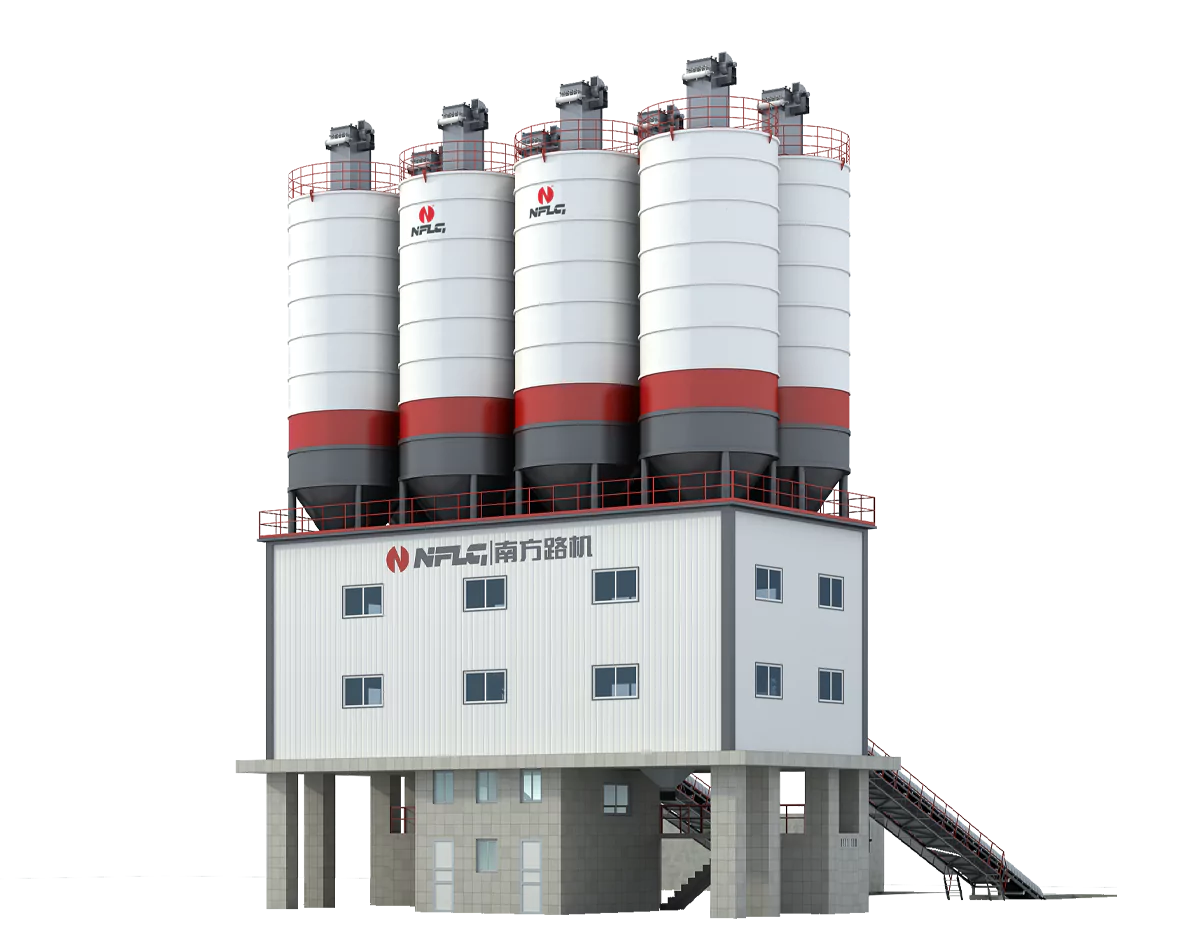
What the SMK-100 station does
The mobile aggregate classification station is used to divide crushed mixed aggregate into two to three grades by particle size . Its stated value lies in moving with the material source: when the material yard location changes, the equipment can be towed as a whole to the new site rather than rebuilding a fixed production line .
That design intent shapes commissioning. Instead of a permanent foundation and a fixed conveyor layout, the checks centre on the towed unit's own inlet, screening arrangement and discharge points once it is set at the new yard.
How mobile sizing fits a batching plant
Sized aggregate is an input to concrete production, so the station's duty is normally read alongside the batching plant it feeds. The HZS180 concrete batching plant datasheet lists a theoretical capacity of 180 cubic metres per hour, a twin-shaft forced mixer of 3 cubic metres, a discharge height of 4.2 metres, a pulse dust collector and a sand separator wastewater recovery system .
Larger commercial plants follow the same pattern with different figures. The HZS240 datasheet states a theoretical output of 240 cubic metres per hour with a twin-shaft forced mixer of 4.5 cubic metres and a discharge height of 4.5 metres . The HZS120 datasheet states a theoretical output of 120 cubic metres per hour with a twin-shaft forced mixer of 2 cubic metres and a discharge height of 4.0 metres .
These figures describe the batching plants, not the sizing station, and they are theoretical outputs from the respective datasheets rather than measured site results.
Reading the two datasheets together
The batching plant datasheets also state measuring accuracies: aggregate within plus or minus 1.0 percent, powder within plus or minus 0.5 percent, water within plus or minus 0.5 percent and admixture within plus or minus 0.5 percent on the HZS240 , with aggregate within plus or minus 1.0 percent and powder and water within plus or minus 0.5 percent on the HZS120 . Grading consistency upstream of the plant therefore matters to how the plant meets its own stated tolerances.
Datasheet boundaries to verify
The SMK-100 source is explicitly flagged as containing smoke placeholder values, so the following boundaries should be confirmed against the released datasheet before commissioning is signed off.
- Processing capacity is approximately the placeholder value SMK-CAP, and in practice depends on the feed particle size distribution and moisture content .
- The recommended feed particle size should not exceed the placeholder ratio SMK-FEED-RATIO of the equipment inlet size .
- The station is not suitable for continuous processing of high-moisture-content sticky materials; such working conditions should be pre-treated first .
Because two of these entries are placeholders rather than fixed numbers, no capacity figure or feed ratio can be quoted for the SMK-100 at this stage. Treat them as items to be filled in from the controlled datasheet.
Feed and moisture limits
Feed condition is the main variable the source calls out. Actual processing capacity depends on the feed particle size distribution and moisture content, so two yards feeding the same station can see different throughput . The recommended feed particle size should not exceed the stated ratio of the equipment inlet size .
Moisture is handled as an exclusion rather than a tuning parameter: the station is not suitable for continuous processing of high-moisture-content sticky materials, and such working conditions should be pre-treated first . Commissioning checks should therefore record the feed gradation and moisture condition actually presented to the unit, not just the nominal setting.
Matching capacity to plant demand
The station's processing capacity is a placeholder value in the current source and depends on feed particle size distribution and moisture content , so it cannot be matched numerically to a batching plant at this stage. What can be compared is the plant side of the chain: theoretical outputs of 120, 180 and 240 cubic metres per hour appear in the HZS120, HZS180 and HZS240 datasheets respectively .
Until the SMK-CAP placeholder is replaced with a verified figure, any capacity matching exercise remains open. Flag this for confirmation with the equipment supplier before committing the station to a continuous pouring schedule.
Commissioning checks before production
A practical sequence based on the available source material:
- Confirm the released datasheet values that replace the SMK-CAP and SMK-FEED-RATIO placeholders .
- Verify the station divides crushed mixed aggregate into two to three grades by particle size as intended .
- Record the feed particle size distribution and moisture content presented during the trial run, since these drive actual capacity .
- Confirm the feed does not exceed the stated ratio of the inlet size .
- Confirm no continuous high-moisture sticky material will be run without pre-treatment .
- Test the towed relocation procedure if the material yard is expected to move, since the unit is designed to be towed as a whole to a new site .
Frequently asked questions
- What does the SMK-100 mobile aggregate sizing station do?
- It divides crushed mixed aggregate into two to three grades by particle size, and it is designed to move with the material source so the unit can be towed as a whole to a new site when the material yard location changes .
- Can I quote a processing capacity for the SMK-100 from the current source?
- No. The source lists processing capacity as the placeholder value SMK-CAP and notes that actual capacity depends on the feed particle size distribution and moisture content, so the figure must be confirmed from the released datasheet .
- What feed material should be avoided?
- The source states the station is not suitable for continuous processing of high-moisture-content sticky materials, and that such working conditions should be pre-treated first .
- How does the station relate to a commercial batching plant's output?
- The batching plant datasheets state theoretical outputs of 120 cubic metres per hour for the HZS120, 180 cubic metres per hour for the HZS180 and 240 cubic metres per hour for the HZS240 . These describe the batching plants; the sizing station's own capacity placeholder is still unverified, so the two cannot yet be matched numerically .
Sources and technical references
- SMK-100 冒烟资料(smoke-20260917T033735Z-16ace8)
section: 1. 用途与边界 - SMK-100 冒烟资料(smoke-20260917T034931Z-5b7ebb)
section: 1. 用途与边界 - hzs180 en datasheet
paragraph 1 - HZS240 商品混凝土搅拌站 — 核心参数
section: HZS240 商品混凝土搅拌站 — 核心参数 - HZS120 商品混凝土搅拌站 — 核心参数
section: HZS120 商品混凝土搅拌站 — 核心参数
Access dates and edition details are recorded with the approved content package for this release.
Next step
Tell us the output you need, the mix designs you run and the space the site can give, and we will answer with the information you have to check.