HZS powder silo side-mounted mixing station ~
This guide answers: What does HZS powder silo side-mounted mixing station mean for a commercial concrete batching plant.
An HZS powder silo side-mounted mixing station is a concrete batching plant in which the cement and other powder silos are mounted alongside the main mixing structure rather than on top of it, freeing the charging area above the mixer. The HZS series covered by the available datasheets spans three models — HZS120, HZS180 and HZS240 — with theoretical outputs of 120, 180 and 240 cubic metres per hour respectively . The figures below describe what those datasheets state so you can compare them against your own site conditions.
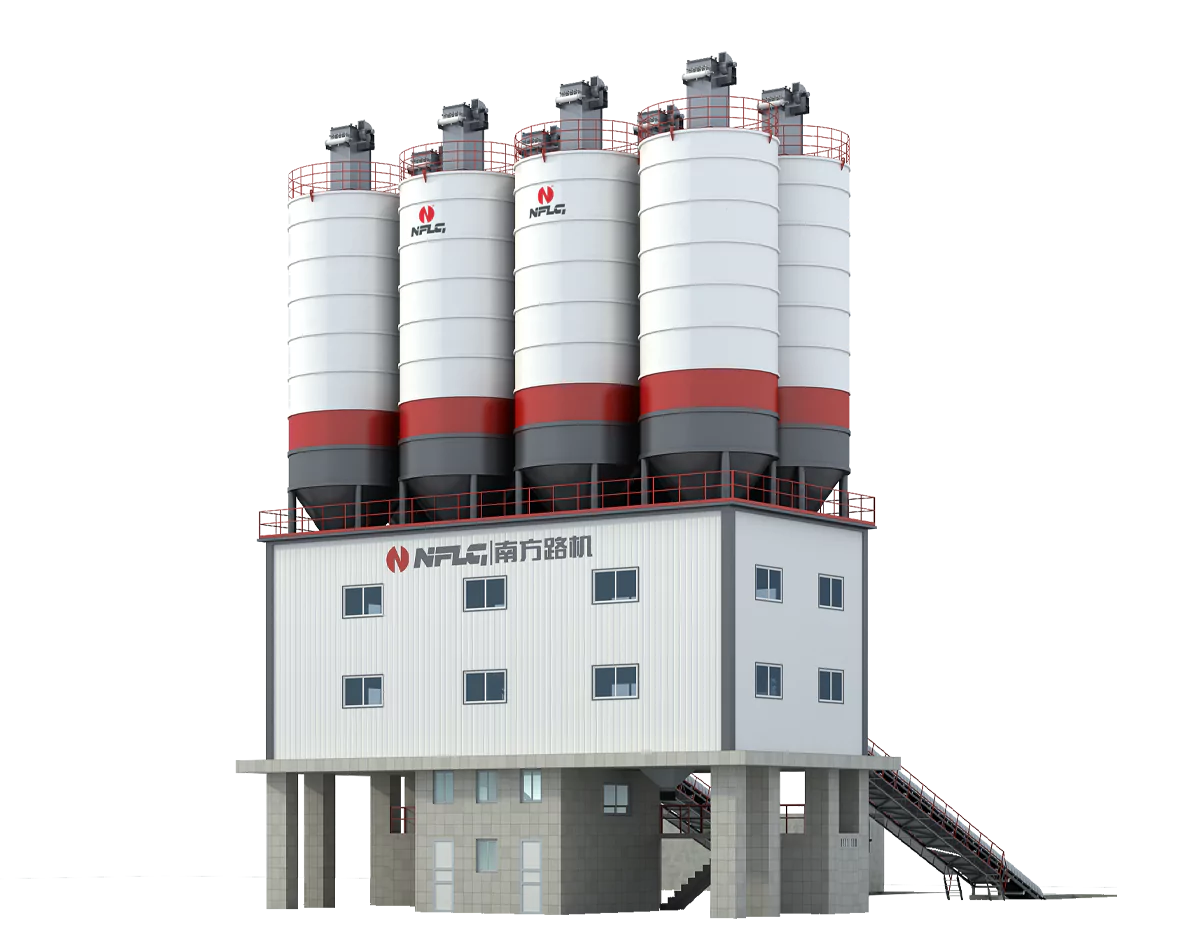
What the term powder silo side-mounted mixing station means
The HZS designation refers to a horizontal, skip-hopper batching plant family. In a side-mounted arrangement the powder silos sit beside the main tower, which changes how the plant footprint, the silo dust collection ducting and the aggregate charging path are laid out on site.
The available documentation does not contain a dedicated drawing or specification for the side-mounted silo arrangement itself, so treat that term as a configuration description rather than a separately documented variant. All capacity, accuracy and environmental figures quoted in this article come from the HZS120, HZS180 and HZS240 model datasheets.
How HZS plants are named and configured
The number in each model name corresponds to its theoretical output in cubic metres per hour. The HZS120 is listed at 120 m³/h, the HZS180 at 180 m³/h, and the HZS240 at 240 m³/h .
All three models use a twin-shaft forced mixer, but with different mixing capacities: 2 m³ on the HZS120, 3 m³ on the HZS180, and 4.5 m³ on the HZS240 . Note that the HZS180 twin-shaft mixer capacity is also given as 3 m³ in a second datasheet for the same model .
The HZS180 datasheet additionally lists a fully automatic batching control system, remote operation and maintenance monitoring with mobile application support, and automatic mix proportion calculation and archiving .
Capacity and mixer figures for HZS120, HZS180 and HZS240
The table below summarises the headline figures as stated in the source documents.
Theoretical output figures are the datasheet values for each model . Mixing capacities are likewise taken from the same model datasheets .
The HZS180 datasheet also states a mixing motor power of 2×75 kW and a power consumption of approximately 1.8 kWh per cubic metre of concrete . Equivalent power figures for the HZS120 and HZS240 are not present in the available sources and are flagged here for human review.
Discharge height and aggregate bin sizing
Discharge height increases with model size in the available data. The HZS120 is listed at 4.0 m, the HZS180 at 4.2 m, and the HZS240 at 4.5 m .
Aggregate bin sizing is stated more fully for the larger models. The HZS180 datasheet specifies four compartments at 20 m³ each , while the HZS240 datasheet specifies four compartments at 25 m³ each . The HZS120 datasheet confirms four compartments but does not state a per-compartment volume in the available text .
Discharge height determines which mixer truck or transfer arrangement can be charged directly, so it should be checked against your fleet before selection.
Batching accuracy tolerances to plan around
The datasheets state aggregate measuring accuracy of plus or minus 1.0 percent, and powder, water and admixture measuring accuracy of plus or minus 0.5 percent . The HZS120 datasheet states aggregate at plus or minus 1.0 percent and powder and water at plus or minus 0.5 percent .
These are the tolerances declared in the source documentation rather than measured outcomes on any particular site. Actual performance depends on calibration, material condition and maintenance practice, which the sources do not quantify.
Dust, wastewater and noise provisions
Dust control is described as a centralized pulse dust collector across the range. The HZS240 datasheet gives a cement silo dust filtration area of 2×80 m² , while the HZS180 datasheet gives 2×72 m² for silo dust collection .
Wastewater handling is described as a sand and gravel separator combined with a plate-and-frame filter press on the HZS180 and HZS240, with zero discharge of waste slurry stated . The HZS120 datasheet lists a sand-gravel separator plus a wastewater recovery system .
For noise, the datasheets state whole-plant noise at or below 70 dB(A) . The HZS180 datasheet additionally lists a soundproof enclosure for the mixer room . Fugitive dust measures on the HZS180 and HZS240 are described as material yard spray dust suppression with online fugitive dust monitoring .
Matching a model to project demand and budget
The datasheets include positioning statements that can help narrow the choice. The HZS240 is positioned for large commercial concrete enterprises and centralized supply to large infrastructure projects, including work requiring high capacity and continuous pouring such as river-crossing bridges, subways and airport expansion .
The HZS120 is positioned for small and medium-sized commercial concrete enterprises and municipal engineering support, and for sites with medium capacity demand and a limited budget .
The available sources do not include an equivalent positioning statement for the HZS180, so that gap is flagged for human review rather than inferred.
What to confirm before ordering
Several items in the source documentation carry a pending verification status, which should be resolved before any order is placed. The HZS120, HZS180 and HZS240 parameter sets are all marked as pending verification by the technical department .
Practical points to confirm against your own site include the discharge height relative to your haulage fleet, the aggregate bin volume needed for your charging cycle, the silo layout implied by a side-mounted arrangement, and the local environmental requirements that apply to your location. The sources do not state which regulations apply in any jurisdiction, and no compliance statement should be assumed from them.
Parameters referenced on this page
| Parameter | Value | Unit |
|---|---|---|
| HZS120 theoretical output | 120 | m³/h |
| HZS180 theoretical output | 180 | m³/h |
| HZS240 theoretical output | 240 | m³/h |
| HZS120 mixer capacity | 2 | m³ |
| HZS180 mixer capacity | 3 | m³ |
| HZS240 mixer capacity | 4.5 | m³ |
Frequently asked questions
What does "side-mounted" refer to in an HZS mixing station?
It describes the placement of the powder silos alongside the main mixing structure rather than above it. The available datasheets do not contain a separate specification for this arrangement, so the term should be treated as a configuration description rather than a documented variant.
Which HZS models are covered by the available datasheets?
Three models are documented: the HZS120 at 120 m³/h, the HZS180 at 180 m³/h, and the HZS240 at 240 m³/h, each using a twin-shaft forced mixer .
How is batching accuracy stated in the datasheets?
Aggregate measuring accuracy is stated as plus or minus 1.0 percent, and powder, water and admixture measuring accuracy as plus or minus 0.5 percent . These are declared tolerances in the source documentation, not measured results from a specific site.
What environmental provisions are listed?
The datasheets list a centralized pulse dust collector, wastewater treatment through a sand and gravel separator with a filter press or recovery system, and whole-plant noise at or below 70 dB(A) .
Are the published figures final?
The HZS120, HZS180 and HZS240 parameter sets are all marked as pending verification by the technical department, so the figures should be confirmed in writing before an order is placed .
Sources and technical references
- hzs180 en datasheet
paragraph 1 - HZS240 商品混凝土搅拌站 — 核心参数
section: HZS240 商品混凝土搅拌站 — 核心参数 - HZS180 商品混凝土搅拌站 — 核心参数
section: HZS180 商品混凝土搅拌站 — 核心参数 - HZS120 商品混凝土搅拌站 — 核心参数
section: HZS120 商品混凝土搅拌站 — 核心参数 - HZS120 商品混凝土搅拌站 — 核心参数(S09 现场验收)
section: 基本参数
Access dates and edition details are recorded with the approved content package for this release.
Next step
Tell us the output you need, the mix designs you run and the space the site can give, and we will answer with the information you have to check.