Cconcrete
Concrete batching plant metering accuracy
Metering accuracy on a commercial concrete batching plant is stated as a tolerance band for each weighed material, and it is verified by comparing scale readings against known loads before production and by checking in-motion results during production. The HZS180 datasheet lists an aggregate metering accuracy of plus or minus 1.0 percent and powder, water and admixture accuracy of plus or minus 0.5 percent , and the HZS120 datasheet lists the same aggregate tolerance of plus or minus 1.0 percent with powder and water at plus or minus 0.5 percent . This article explains how those tolerances are checked and which site conditions tend to push a plant away from them.
- Published:
- Updated:
- Author:
- NFLG Technical Team
- Publisher:
- NFLG
Why metering accuracy decides mix design conformity
A mix design is written as masses of aggregate, powder, water and admixture per cubic metre. The batching control system converts those masses into target weights for each weigh hopper, and the tolerance band defines how far the delivered weight may sit from the target. The national standard for concrete mixers requires the machine to mix concrete uniformly within a specified time, which is the process context in which weighing checks are carried out . Commercial specifications for batch mixers are expressed as discharge capacity in litres or cubic metres, and that rated discharge capacity is the basis on which output and tolerance are judged .
When a scale drifts, the error does not appear as a visible defect. It appears as a shift in water demand, slump, strength scatter or admixture consumption, which is why routine verification matters more than a single acceptance test.
Stated tolerances for aggregate, powder, water and admixture
The published figures for the two models covered by the approved datasheets are summarised below.
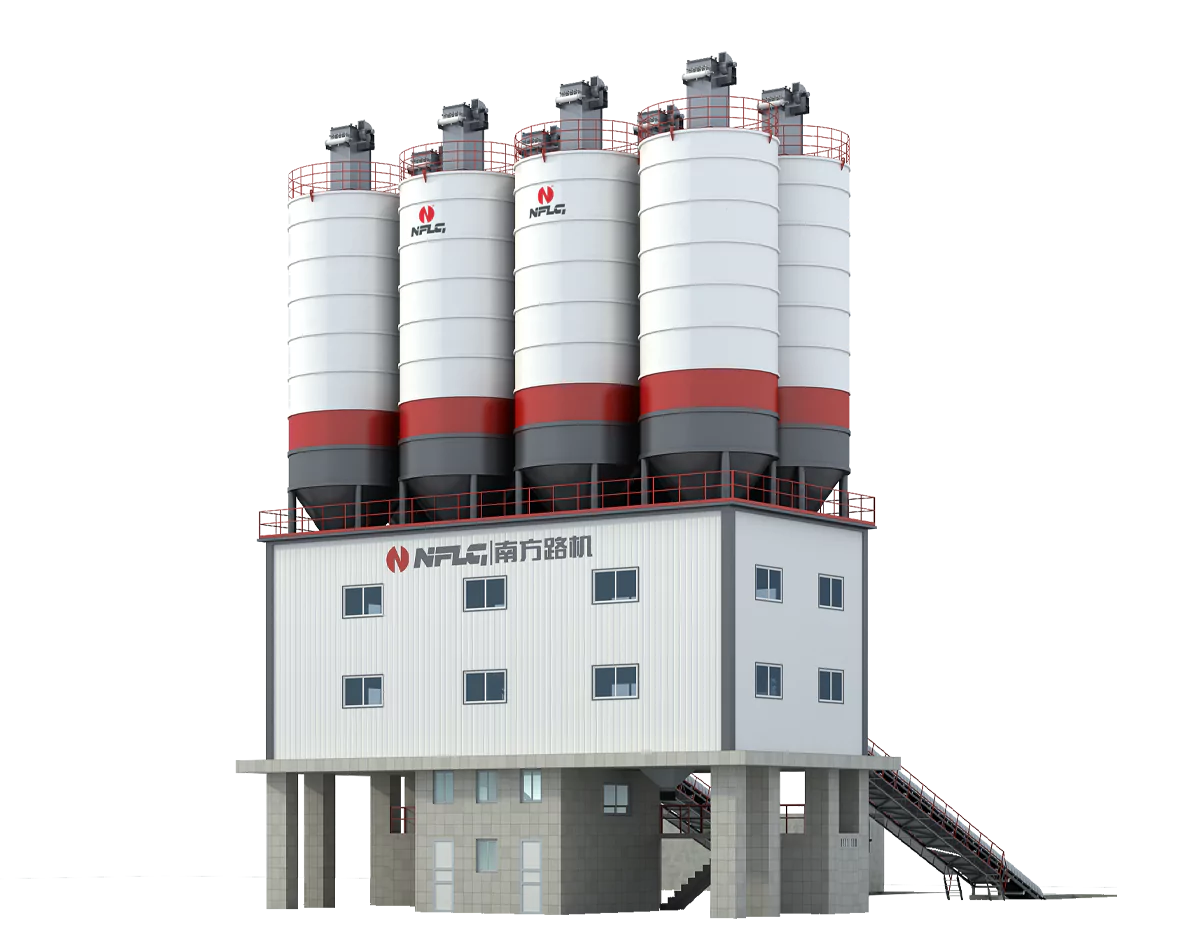
The HZS180 uses a double-shaft forced mixer with a mixing capacity of 3 m³ , while the HZS120 uses a double-shaft forced mixer with a mixing capacity of 2 m³ . Aggregate is held in four compartments on both models, with each compartment rated at 20 m³ on the HZS180 . Discharge height is 4.2 m on the HZS180 and 4.0 m on the HZS120 . These physical parameters matter to verification because hopper geometry, discharge height and compartment count determine how the test loads can be placed and how quickly material leaves the scale.
Aggregate versus powder, water and admixture
Aggregate carries the widest stated band, plus or minus 1.0 percent, on both models . Powder, water and admixture are held to plus or minus 0.5 percent on the HZS180 , and powder and water to plus or minus 0.5 percent on the HZS120 . The pattern reflects the fact that aggregate is weighed in large batches from belt or skip feed, while cementitious powder, water and chemical admixture are metered in smaller quantities where a percentage error translates into a smaller absolute mass but a proportionally larger effect on the mix.
Scale calibration and static verification routine
Static verification is performed with the plant stopped. Known test weights, or a verified load cell calibration rig, are applied to each weighing assembly and the indicated value is compared with the applied value across the working range. The check covers the aggregate scales, the powder scale, the water scale and the admixture scale, because each has its own load cells, its own mechanical restraint and its own zero point.
The HZS180 is supplied with a fully automatic batching control system with remote monitoring and automatic mix proportion calculation and archiving . Those functions record the target and actual weight for each batch, which gives the verification routine a data trail rather than a single pass or fail result. Records should be kept against the date, the material weighed, the applied load and the indicated reading so that a trend can be seen before the deviation reaches the tolerance limit.
In-motion checks and discharge timing
Static calibration confirms the scale, but production accuracy also depends on what happens while material is moving. In-motion checks compare the final settled weight of a batch against the target after the feeder has closed. The difference between the two is the basis for adjusting the control system's compensation for material that is already in flight when the gate begins to close.
Discharge timing interacts with this. The standard requires that the discharge mechanism open freely and empty cleanly , and residual material left in a hopper or on a belt carries over into the next batch as an unweighed addition. Checking that each hopper empties fully between batches is therefore part of the same routine as the in-motion weight check.
What the standards require of batching and mixing equipment
The mixer standard requires that the drum and mixing blades be made of wear-resistant material, that the discharge mechanism open freely and discharge cleanly, and that the transmission system be fitted with guards and the electrical system with leakage protection . Wear resistance is directly relevant to metering, because worn blades and liners change the mixing action and can leave material adhering to the drum, which in turn affects the repeatability of batch weights.
The green production code for ready-mixed concrete requires that dust, wastewater, noise and solid waste emissions stay within the limits set by the code . The code also sets out dust control through enclosure or semi-enclosure of the material yard with dust removal equipment at the mixing level and at the powder silos, wastewater collection and treatment for reuse, and noise control through sound insulation and vibration damping at the mixer and other noise sources . It provides for green production ratings at one-star, two-star and three-star levels . Local rules such as Guangdong DBJ/T 15-174 refine the national green production code with additional regional requirements . These environmental provisions are not separate from weighing: a dust-covered load cell, a vibrating structure or a water-logged foundation all change what the scale reports.
Environmental controls that support stable weighing
The HZS180 datasheet describes a centralised pulse dust collector with a filter area of 2 x 72 m² for the powder silos, a sand-and-gravel separator combined with a plate-and-frame filter press for zero wastewater discharge, sound insulation enclosures on the mixer room with whole-plant noise at or below 70 dB(A), and spray dust suppression in the material yard with online dust monitoring . The HZS120 datasheet lists a centralised pulse dust collector, a sand-and-gravel separator with a wastewater recovery system, and whole-plant noise at or below 70 dB(A) . The HZS180 also states a power consumption of approximately 1.8 kWh per cubic metre of concrete and a mixing motor power of 2 x 75 kW .
Conditions that erode accuracy
Moisture in aggregate changes the effective mass being weighed and is a common source of drift between the target and the delivered weight. Dust accumulation on load cells and on weighing frames adds a parasitic load. Vibration transmitted from the mixer or from adjacent traffic disturbs the reading during the settling window. Mechanical wear at pivot points and linkage joints changes the transfer of load to the cell. None of these conditions is eliminated by a one-off calibration, which is why the verification routine is periodic rather than single.
Record keeping and corrective actions after a drift
When a check shows a deviation, the first step is to establish whether the cause is mechanical, electrical or procedural. Zero and span are re-checked, the weighing assembly is inspected for obstruction and interference, and the in-motion compensation is reviewed against recent batch records. Corrective action is then recorded alongside the original deviation so that the next verification can be compared with it.
The automatic mix proportion calculation and archiving function on the HZS180 supports this by keeping batch records available for review . Plants positioned for medium output, such as the HZS120, are described as suited to small and medium commercial concrete producers and municipal project support, where the output requirement is moderate and the budget is limited . In that setting, a simple, consistently applied verification routine is more useful than an elaborate one that is rarely performed.
Parameters referenced on this page
| Parameter | Value | Unit |
|---|---|---|
| Aggregate metering accuracy (HZS180) | ±1.0 | % |
| Powder metering accuracy (HZS180) | ±0.5 | % |
| Water metering accuracy (HZS180) | ±0.5 | % |
| Admixture metering accuracy (HZS180) | ±0.5 | % |
| Aggregate metering accuracy (HZS120) | ±1.0 | % |
| Powder metering accuracy (HZS120) | ±0.5 | % |
| Water metering accuracy (HZS120) | ±0.5 | % |
Frequently asked questions
- What tolerances are stated for aggregate, powder, water and admixture on these plants?
- The HZS180 datasheet states aggregate metering accuracy of plus or minus 1.0 percent and powder, water and admixture accuracy of plus or minus 0.5 percent . The HZS120 datasheet states aggregate accuracy of plus or minus 1.0 percent and powder and water accuracy of plus or minus 0.5 percent .
- How is batching accuracy verified in practice?
- Verification combines a static check, in which known loads are applied to each weighing assembly with the plant stopped, and an in-motion check, in which the settled batch weight is compared with the target after the feeder closes. The national standard's requirement that the machine mix concrete uniformly within a specified time sets the process context for these checks .
- Which site conditions tend to push a plant outside its stated tolerance?
- Aggregate moisture, dust build-up on load cells and weighing frames, vibration from the mixer or nearby traffic, and mechanical wear at pivot points and linkage joints are the conditions that most commonly shift readings. The green production code addresses dust, wastewater, noise and solid waste through enclosure, dust removal, treatment and noise control measures , and those same measures support stable weighing.
- What does the standard require of the batching and mixing equipment itself?
- The mixer standard requires that the drum and mixing blades be made of wear-resistant material, that the discharge mechanism open freely and discharge cleanly, and that the transmission system have guards and the electrical system have leakage protection . Commercial specifications for batch mixers are expressed as discharge capacity in litres or cubic metres .
Sources and technical references
- GB/T 200.1-2017 混凝土搅拌机 — 标准要点
section: GB/T 200.1-2017 混凝土搅拌机 — 标准要点 - JGJ/T 328-2014 预拌混凝土绿色生产及管理技术规程
section: JGJ/T 328-2014 预拌混凝土绿色生产及管理技术规程 - HZS180 商品混凝土搅拌站 — 核心参数
section: HZS180 商品混凝土搅拌站 — 核心参数 - HZS120 商品混凝土搅拌站 — 核心参数
section: HZS120 商品混凝土搅拌站 — 核心参数
Access dates and edition details are recorded with the approved content package for this release.
Next step
Tell us the output you need, the mix designs you run and the space the site can give, and we will answer with the information you have to check.