Cconcrete
Commercial concrete batching plant environmental controls
A commercial concrete batching plant is reviewed for green production on four fronts: dust, wastewater, noise and solid waste. The national technical regulation for green production of ready-mixed concrete requires plants to keep emissions within the limits set by that regulation, and plants must be able to show the equipment and the monitoring records that demonstrate it . This article breaks those requirements down into the controls a plant needs and the site-level evidence each control has to produce.
- Published:
- Updated:
- Author:
- NFLG Technical Team
- Publisher:
- NFLG
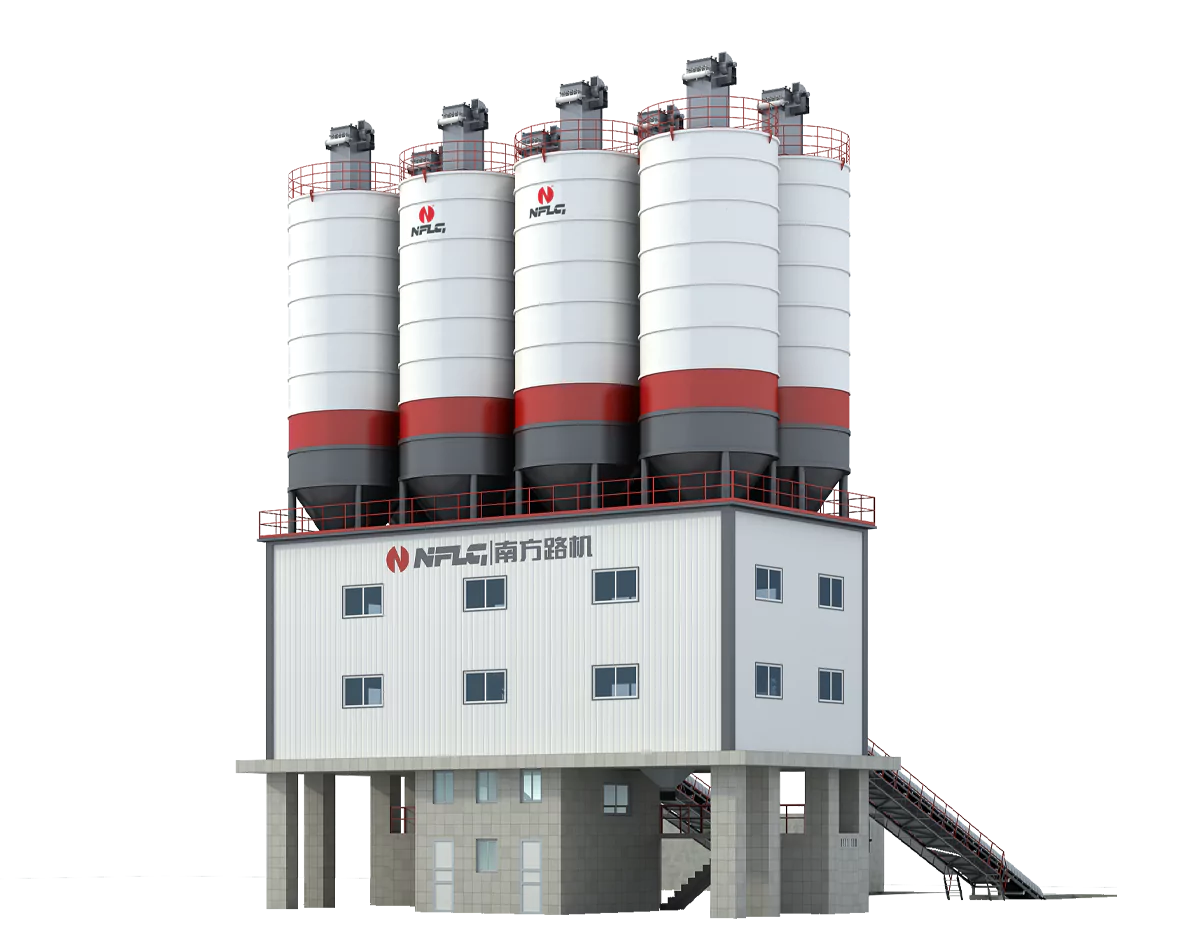
What a green production review actually checks
The national regulation, JGJ/T 328-2014 Technical specification for green production and management of ready-mixed concrete, was issued by the Ministry of Housing and Urban-Rural Development and took effect on 1 December 2014. It requires batching plants to achieve green production, with dust, wastewater, noise and solid waste emissions meeting the limits set out in the specification . The regulation also provides for green production ratings at one-star, two-star and three-star levels, so a plant's target grade determines how far the controls have to go .
Reviewers work from two layers of requirements. The national specification sets the framework, and provincial standards refine it — Guangdong's DBJ/T 15-174 is one example of a local standard built on top of the national regulation . Under the Guangdong standard, new batching plants must reach the three-star green production level .
The four control areas
The controls group into four areas that reviewers examine separately:
- Dust: material yards must be closed or semi-closed, and the mixing floor and powder silos must be fitted with dust removal devices .
- Wastewater: production wastewater and truck-washing wastewater must be collected, treated and reused so that the plant reaches zero discharge .
- Noise: noise sources such as the mixing host must use sound insulation and vibration damping measures .
- Solid waste: solid waste emissions fall under the same limit-based framework as the other three streams .
Where local rules add numbers
The national regulation sets the framework but not every figure. The Guangdong standard supplies measurable limits: fugitive particulate emissions are capped at 1.0 mg/m³ , and boundary noise is limited to 70 dB(A) . These are the values a reviewer in that jurisdiction measures against.
Dust controls: sealed yards, silo filters and spray suppression
Dust control starts with containment. Material yards must be closed or semi-closed, and dust removal devices are required at the mixing floor and at the powder silos . Under the Guangdong standard, aggregate bins must be fully enclosed steel structures fitted with roof dust removal and spray suppression devices , and powder silos must be equipped with pulse dust collectors whose filtration accuracy meets the emission limit .
The combination matters because the two sources of dust behave differently. Aggregate handling produces coarse, intermittent dust that containment and water spray address, while cement and fly-ash handling at the silos produces fine particulate that needs filtration. A yard that is sealed but has unfiltered silos, or silos with filters but an open yard, leaves one of the two pathways uncontrolled.
Spray suppression and monitoring
Yard spray suppression is the second layer behind enclosure. On the HZS180 batching plant, dust control combines yard spray suppression with online dust monitoring . The plant also uses a centralized pulse dust collector, with a powder silo dust removal filtration area of 2 × 72 m² .
Online dust and noise monitoring as review evidence
Monitoring is not optional in the Guangdong framework: plants are required to install online dust and noise monitoring systems . This changes what a review looks like in practice. Instead of a single spot measurement on inspection day, the plant produces a continuous record covering normal operation, material deliveries and cleaning cycles.
The HZS180 datasheet reflects this by pairing yard spray suppression with online dust monitoring as a single dust-control package . The value of the monitoring record to a reviewer is that it shows whether the control equipment was running when dust was being generated, not merely that it was installed.
What the record has to line up with
The monitoring record is read against the emission limits. In Guangdong, the number to compare against is 1.0 mg/m³ for fugitive particulate emissions . For noise, the comparison value is 70 dB(A) at the plant boundary . A record that shows excursions above those values, with no corresponding maintenance or corrective action noted, is the kind of gap that stalls acceptance.
Wastewater and waste slurry: separation, recycling and zero discharge
Wastewater is treated as a resource rather than a waste stream. The national regulation requires production wastewater and truck-washing wastewater to be collected, treated and reused, reaching zero discharge . Under the Guangdong standard, wastewater and waste slurry systems must include sand-gravel separators and water recovery to achieve zero discharge .
Zero discharge is an equipment requirement, not just a housekeeping one. Water that has been used for washing out mixers and trucks carries cement fines and aggregate; recovering it means separating the solids and returning the water to the production process.
How the separation train is configured
On the HZS180, the wastewater system pairs a sand-gravel separator with a plate-and-frame filter press to achieve zero slurry discharge . The separator recovers aggregate, and the filter press dewaters the remaining fines so that the clarified water can be recycled. The same equipment pattern — separator plus recovery system — is what the Guangdong standard requires .
Noise controls: enclosure, vibration damping and boundary limits
Noise control has two parts: reducing noise at the source and keeping what remains inside the boundary limit. The national regulation requires sound insulation and vibration damping measures on noise sources such as the mixing host . The Guangdong standard sets the boundary result at 70 dB(A) .
Source treatment is where the engineering effort goes. The mixing host is the dominant continuous noise source, and the measures named in the regulation — insulation and damping — address both airborne noise through enclosure and structure-borne noise through isolation.
Enclosure at equipment level
The HZS180 encloses the mixer room for sound insulation, and the datasheet states whole-plant noise at or below 70 dB(A) . That figure aligns with the boundary limit in the Guangdong standard . A reviewer will typically look for both the enclosure itself and the measurement that shows the boundary result.
Equipment-level specs that support each control
The control areas map onto specific equipment items. The table below lists the parameters stated in the HZS180 product datasheet.
The environmental items in that list — the silo filtration area of 2 × 72 m² and the whole-plant noise figure of 70 dB(A) or below — correspond directly to the dust and noise control requirements described above.
Supplier-level environmental packages
Equipment suppliers package these controls as an integrated scope. The environmental package offered by NFLG covers enclosed material yards, dust removal and wastewater recovery, positioned to meet green production requirements . NFLG, headquartered in Quanzhou, Fujian, builds batching plants, asphalt mixing equipment, dry-mix mortar equipment, crushing and screening equipment and stabilized soil mixing equipment, and provides installation, commissioning, technical training and after-sales maintenance . The company states that its mixer development is in-house, using twin-shaft forced mixers with wear-resistant blades, and that its intelligent functions include remote operation and maintenance monitoring and automatic mix-design control .
Site-level records and documents reviewers expect
Beyond the hardware, a green production review looks at the paperwork that surrounds the plant. The Guangdong framework lists the approvals a ready-mixed concrete enterprise must hold: a specialized contracting qualification, an environmental impact assessment report that has been prepared and approved, and supporting permits including a pollutant discharge permit and a water abstraction permit .
Monitoring records sit alongside those documents. Because online dust and noise monitoring is mandatory in that jurisdiction , the resulting data forms part of the evidence file rather than being gathered only at inspection time.
Capacity replacement for non-compliant plants
Guangzhou applies capacity replacement to existing batching plants that exceed energy consumption limits or fail environmental standards . The replacement process runs in three stages: demolish the old plant, build a new plant that meets the standard, then pass acceptance . For an operator in that situation, the green production requirements are not a retrofit question but a condition of continuing to operate at that site.
Common gaps that stall acceptance
The most frequent gap is a control that exists on the equipment list but not in the monitoring record. A plant can have pulse collectors on its silos and still fail review if the online dust data is missing or shows excursions above 1.0 mg/m³ .
A second gap is partial coverage. Sealing the aggregate yard while leaving the mixing floor without dust removal addresses one of the two locations the regulation names . The same applies to wastewater: collection without a separator and recovery system does not reach zero discharge .
A third gap is documentation. Equipment drawings describe what was installed; permits, the approved environmental impact assessment and the monitoring record describe how the plant operates . Reviewers ask for both, and a plant that has the equipment but not the file is not yet in a position to demonstrate green production.
Parameters referenced on this page
| Parameter | Value | Unit |
|---|---|---|
| Theoretical output | 180 | m³/h |
| Mixer type | Twin-shaft forced, 3 m³ capacity | — |
| Discharge height | 4.2 | m |
| Aggregate bins | 4 compartments, 20 m³ each | — |
| Aggregate weighing accuracy | ±1.0 | % |
| Powder weighing accuracy | ±0.5 | % |
| Water weighing accuracy | ±0.5 | % |
| Admixture weighing accuracy | ±0.5 | % |
| Silo dust filtration area | 2 × 72 | m² |
| Whole-plant noise | ≤70 | dB(A) |
| Mixing motor power | 2 × 75 | kW |
| Concrete power consumption | approx. 1.8 | kWh/m³ |
Frequently asked questions
- What emission areas does the national green production regulation cover?
- The regulation covers dust, wastewater, noise and solid waste, and requires batching plants to keep emissions in all four areas within the limits set by the specification .
- What dust controls are required at the material yard and at the silos?
- Material yards must be closed or semi-closed, and the mixing floor and powder silos must be fitted with dust removal devices . Under the Guangdong standard, aggregate bins must be fully enclosed steel structures with roof dust removal and spray suppression, and powder silos must use pulse dust collectors whose filtration accuracy meets the emission limit .
- How is boundary noise limited for a batching plant?
- The Guangdong green production standard sets boundary noise at 70 dB(A) or below . The national regulation requires sound insulation and vibration damping measures on noise sources such as the mixing host , and the HZS180 datasheet states whole-plant noise at or below 70 dB(A) with an enclosed mixer room .
- What documents does a ready-mixed concrete enterprise need to hold?
- The Guangdong framework lists a specialized contracting qualification, a prepared and approved environmental impact assessment report, and supporting permits including a pollutant discharge permit and a water abstraction permit . Online dust and noise monitoring systems are also mandatory in that jurisdiction, so their data forms part of the record .
- What happens to existing plants that do not meet the standards?
- Guangzhou applies capacity replacement to existing batching plants that exceed energy consumption limits or fail environmental standards . The process is to demolish the old plant, build a new one that meets the standard, and then pass acceptance .
Sources and technical references
- JGJ/T 328-2014 预拌混凝土绿色生产及管理技术规程
section: JGJ/T 328-2014 预拌混凝土绿色生产及管理技术规程 - 广州预拌混凝土行业绿色生产与环保要求
section: 广州预拌混凝土行业绿色生产与环保要求 - HZS180 商品混凝土搅拌站 — 核心参数
section: HZS180 商品混凝土搅拌站 — 核心参数 - 南方路机 — 企业简介
section: 南方路机 — 企业简介
Access dates and edition details are recorded with the approved content package for this release.
Next step
Tell us the output you need, the mix designs you run and the space the site can give, and we will answer with the information you have to check.