Cconcrete
Commercial concrete batching plant environmental controls
Chinese standards approach batching plant environmental control through two layers: a national green production specification that covers dust, wastewater, noise and solid waste, and provincial rules that can add stricter numeric limits. Buyers comparing commercial plants should therefore check the mixer specification standard, the national green production specification, and any local refinement that applies to the intended site.
- Published:
- Updated:
- Author:
- NFLG Technical Team
- Publisher:
- NFLG
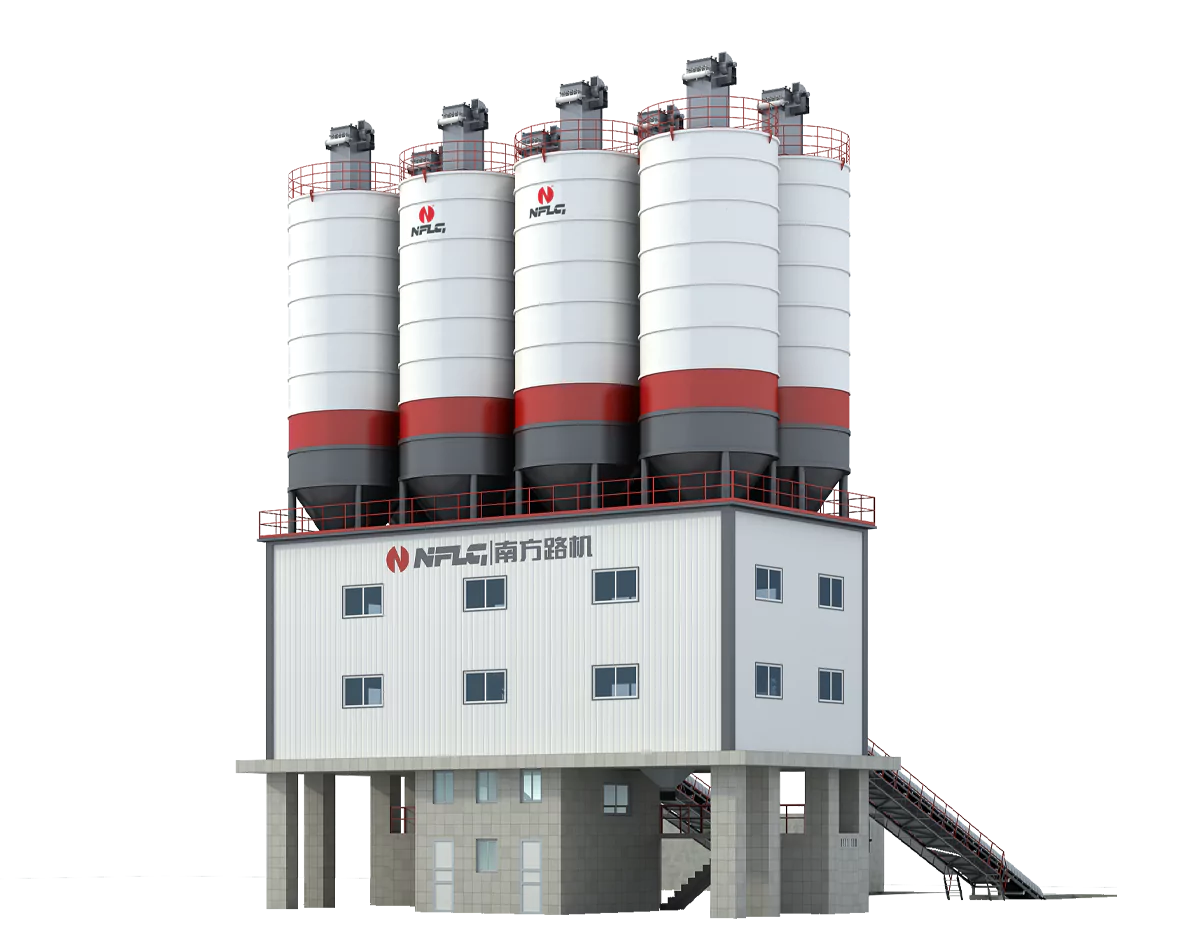
What environmental controls apply to a commercial batching plant
The national baseline is JGJ/T 328-2014, "Technical Specification for Green Production and Management of Ready-Mixed Concrete," issued by the Ministry of Housing and Urban-Rural Development and effective from 1 December 2014. It requires the batching plant to achieve green production, with pollutant emissions such as dust, wastewater, noise and solid waste kept within the limits the specification sets .
The specification addresses four control areas in parallel: dust, wastewater, noise and solid waste. It also provides for a green production evaluation in which a plant reaches one of three grades — one-star, two-star or three-star . Alongside the specification, there are evaluation indicators covering batching plant capacity, energy consumption and emissions .
Dust, wastewater and noise measures in the national specification
On dust, the material yard is to be enclosed or semi-enclosed, and dust removal devices are to be installed at the mixing level and at the cement silos .
On wastewater, production wastewater and vehicle washing wastewater are to be collected, treated and recycled so that the plant achieves zero discharge .
On noise, sound insulation and vibration damping measures are to be taken for noise sources such as the mixer unit .
Dust limits and enclosure requirements for material yards and silos
Regional rules can go beyond the national specification. Guangdong's provincial local standard DBJ/T 15-174, "Green Production Management Specification for the Ready-Mixed Concrete Industry," requires batching plants to meet green production standards, and newly built batching plants must meet the three-star green production standard . Because local standards refine the national specification in this way, regional requirements can be stricter than JGJ/T 328-2014 .
Under the Guangzhou requirements, fugitive particulate matter emission concentration is limited to 1.0 mg/m³ or less . Aggregate bins must be fully enclosed steel structures equipped with bin-top dust removal and spray dust suppression devices . Cement silos must be equipped with pulse dust collectors, with filtration accuracy meeting the emission limits . Online dust and noise monitoring systems are mandatory .
Wastewater and waste slurry: collection, treatment and zero discharge
The national specification's zero-discharge requirement for production and vehicle washing wastewater is carried through in regional practice . Under the Guangzhou requirements, wastewater and waste slurry must be handled with sand and gravel separators and wastewater recovery systems to achieve zero discharge .
Mixer trucks are also addressed: they are to be equipped with GPS and temperature monitoring devices .
Noise limits at the plant boundary and mixer sound insulation
The national specification approaches noise through source treatment — sound insulation and vibration damping for noise sources such as the mixer unit . At the boundary, the Guangzhou requirements set a plant boundary noise limit of 70 dB(A) or below . Online noise monitoring is mandatory under those requirements .
Green production grading and regional refinements
JGJ/T 328-2014 provides for green production grades of one star, two stars and three stars . Guangdong's DBJ/T 15-174 requires newly built batching plants to meet the three-star level . Various regions, Guangdong's DBJ/T 15-174 among them, refine local requirements on the basis of the national specification .
Guangzhou also implements capacity replacement for existing batching plants with excessive energy consumption or failing environmental standards. The replacement process runs from demolishing the old plant, to building a new compliant plant, to acceptance .
Checking datasheet capacity and equipment against the buyer's site conditions
Mixer commercial specifications are expressed by discharge capacity, in litres or cubic metres, under GB/T 200.1-2017, "Concrete mixers — Part 1: Vocabulary and commercial specifications" . That standard replaced GB/T 200-1980 and applies to batch-type concrete mixers whose main purpose is mixing concrete . Batch-type mixers are divided by mixing drum structure into free-fall type and forced type; forced-type mixers mix by blades and are intended for stiff concrete and various aggregates .
The correspondence between a mixer's nominal discharge capacity and its feed capacity is to conform to the standard's attached table, so the two figures should be read together rather than treated as interchangeable . GB/T 200.1-2017 also requires that the mixer be able to mix concrete uniformly within the specified time, that the mixing drum and mixing blades be made of wear-resistant materials, that the discharge mechanism open flexibly and discharge cleanly, and that the transmission system have a protective guard with leakage protection on the electrical system .
As a reference point for what a datasheet lists, the HZS180 datasheet states a theoretical capacity of 180 m³/h, a 3 m³ twin-shaft forced mixer, a discharge height of 4.2 m, a pulse dust collector and a sand separator wastewater recovery system . Capacity choice should match the buyer's demand profile: smaller plants suit medium-capacity sites and budget-limited projects .
Documents and approvals to confirm before purchase
Ready-mixed concrete enterprises must obtain professional contracting qualifications, prepare and secure approval of environmental impact assessment reports, and hold supporting procedures such as pollutant discharge permits and water withdrawal permits .
Parameters referenced on this page
| Parameter | Value | Unit |
|---|---|---|
| Fugitive particulate matter emission concentration (Guangzhou requirements) | 1.0 or less | mg/m³ |
| Plant boundary noise (Guangzhou requirements) | 70 or less | dB(A) |
| Theoretical capacity (HZS180 datasheet) | 180 | m³/h |
| Twin-shaft forced mixer (HZS180 datasheet) | 3 | m³ |
| Discharge height (HZS180 datasheet) | 4.2 | m |
Frequently asked questions
- Which national standard sets the environmental baseline for a ready-mixed concrete batching plant?
- JGJ/T 328-2014, "Technical Specification for Green Production and Management of Ready-Mixed Concrete," issued by the Ministry of Housing and Urban-Rural Development and effective from 1 December 2014, requires the plant to achieve green production with dust, wastewater, noise and solid waste emissions within the limits it specifies .
- How is dust controlled at the material yard and cement silos?
- The national specification requires the material yard to be enclosed or semi-enclosed and dust removal devices to be installed at the mixing level and cement silos . Under the Guangzhou requirements, aggregate bins must be fully enclosed steel structures with bin-top dust removal and spray dust suppression, and cement silos must use pulse dust collectors whose filtration accuracy meets the emission limits .
- What wastewater treatment does the specification require?
- Production wastewater and vehicle washing wastewater are to be collected, treated and recycled to achieve zero discharge . The Guangzhou requirements specify sand and gravel separators plus wastewater recovery systems to achieve zero discharge of wastewater and waste slurry .
- How is mixer capacity defined in the standard?
- GB/T 200.1-2017 expresses mixer commercial specifications by discharge capacity in litres or cubic metres , and the correspondence between nominal discharge capacity and feed capacity is to conform to the standard's attached table .
Sources and technical references
- JGJ/T 328-2014 预拌混凝土绿色生产及管理技术规程
section: JGJ/T 328-2014 预拌混凝土绿色生产及管理技术规程 - 广州预拌混凝土行业绿色生产与环保要求
section: 广州预拌混凝土行业绿色生产与环保要求 - GB/T 200.1-2017 混凝土搅拌机 — 标准要点
section: GB/T 200.1-2017 混凝土搅拌机 — 标准要点 - hzs180 en datasheet
paragraph 1 - HZS120 商品混凝土搅拌站 — 核心参数(S09 现场验收)
section: 适用场景
Access dates and edition details are recorded with the approved content package for this release.
Next step
Tell us the output you need, the mix designs you run and the space the site can give, and we will answer with the information you have to check.